
Gifted ADHD: Why Do I Have to Remind Him Ten Times Every Day?

“My child is gifted. Why do I have to remind him ten times every day?”
At Breakthrough ADHD Center, many parents describe the same confusing contrast. Their child may explain a complex idea, notice connections others miss, or remember remarkable details about a favourite subject. Yet an ordinary assignment can still require reminder after reminder before it begins.
Some of these children have been formally identified as gifted or twice-exceptional, often called 2e. Others have not been assessed, but their intellectual strengths are clear to teachers, family members, and peers. In either case, visible brightness does not explain why starting and following through can remain so difficult.
For over 20 years, I have worked with neurofeedback and brain training. One distinction has become central to my work with bright children: understanding a task and reliably activating the attention needed to carry it out are different capacities.
Why can a bright child still need so many reminders?
Parents in our clinic often report that getting an assignment started takes one to two hours on a school day. Across five school days, that can amount to five to ten hours spent getting started before the assignment is completed. This calculation is based on what families describe, not a published population statistic.
A parent may give the instruction, receive a clear answer, and reasonably believe the child is about to begin. Ten minutes later, the document is still blank. Another reminder follows, then another check, while the parent tries to return attention to work, another child, dinner, or the rest of the evening.
The important question is what happens between hearing the instruction and beginning the task. A child may understand what is expected but struggle to keep the goal active, choose the first step, shift away from a more absorbing activity, or sustain engagement once the task becomes uncomfortable.
Working memory can contribute to this gap because it helps a child keep relevant information active while using it. Research involving children with ADHD found substantial difficulty in some working-memory components, along with considerable variation from one child to another (Fosco et al., 2020). Repeated reminders therefore point to a pattern worth understanding; they do not reveal a single universal cause.
Why can giftedness make the pattern harder to see?
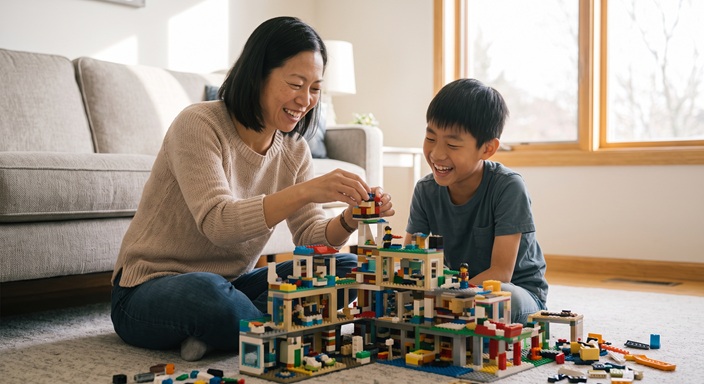
High intellectual ability can help a child compensate. A bright child may answer correctly, contribute insightfully in class, or produce an acceptable final assignment. The result can hide the time, prompting, redirection, and emotional effort required before the work became visible.
Research with highly intelligent children and adolescents found that ADHD-related cognitive differences were broadly similar to those found in average-intelligence participants with ADHD. Some differences became less apparent when highly intelligent children were compared with average-intelligence peers rather than peers of similarly high ability (Cadenas et al., 2020).
This is why I look beyond whether the assignment was eventually completed. I want to know how independently the child could begin, how much adult support held the task together, and whether that level of support can be sustained day after day.
Why can parents and teachers see different patterns?
The finished assignment may be what the school sees. Parents may see the hour before the first sentence, the repeated returns to the desk, and the work that continues into the evening. Both observations can be accurate because home and school provide different structures and reveal different parts of the child’s functioning.
A study comparing parent and teacher ratings found that parents reported more inattention in gifted children with ADHD than teachers did. The finding supports gathering information across settings rather than letting one observation stand in for the whole child (François-Sévigny et al., 2022).
Parents often describe this strain carefully. They may say, “It takes quite a bit of involvement to keep things moving.” That restrained sentence can represent hours of interrupted attention each week and a persistent concern about how to support independence without damaging the child’s confidence.
What does the hardware side add to the explanation?
I use a simplified hardware-and-software analogy to help parents understand this unevenness. It is a teaching analogy, not a literal division of the brain and not a diagnostic model.
The software side includes learned skills, communication, motivation, confidence, relationships, interests, curiosity, and the strategies a child has developed. Development, sleep, nutrition, physiology, sensory demands, and the environment can also affect daily functioning. These factors matter and often interact.
I describe brainwave regulation as part of the hardware side of attention and mood regulation. Brain activity helps support how attention shifts, sustains, and adapts to changing demands. In many family conversations, this category has received less attention than behaviour, motivation, or consequences.
The analogy gives parents a more useful question. Instead of assuming that the child lacks willpower or is being defiant, the family can ask what may be interfering with reliable access to attention and regulation in that moment. This does not excuse every behaviour or identify one root cause. It broadens the view of the interacting factors that may be driving and maintaining the pattern.
When neurofeedback training is being considered, I recommend assessment first. Neurofeedback does not diagnose ADHD, ASD, or giftedness. Assessment helps determine whether the child appears to be an appropriate candidate and whether a training plan may be relevant.
In our model, parent coaching is as critical as neurofeedback training. Coaching helps parents connect the child’s daily patterns with possible contributing factors and respond without reducing every difficulty to motivation or defiance. The goal is a clearer understanding of the child, not simply more reminders.
What can an individual conversation clarify?

A useful conversation begins with the pattern: how often reminders are needed, where the child functions independently, what happens before the task begins, and how home and school observations compare. Similar delays can arise from different combinations of attention, working memory, emotion, learning demands, health, environment, and family circumstances.
For some families, assessment may be a useful next step. For others, a psychological or medical evaluation, counselling, parent support, educational planning, or another form of care may be more appropriate. The first task is to organize the questions before deciding what the child needs.
Parents concerned about repeated reminders, long delays around starting schoolwork, or the gap between a bright child’s understanding and daily independence may request a complimentary call with the Breakthrough ADHD Center team.
The call provides a place to discuss the child’s strengths, the support already required, and whether an assessment or another next step may be appropriate. Families are welcome whether giftedness or ADHD has been formally identified or is still being considered. You can request a call through the Breakthrough ADHD Center website.
Frequently Asked Questions
Why can a bright child need repeated reminders?
Advanced reasoning does not guarantee equally advanced task initiation, working memory, organization, or attention regulation. A child may understand the instruction and still lose the goal while shifting between activities or deciding how to begin. The pattern needs to be understood in context, not explained by intelligence alone.
Do repeated reminders mean a child is lazy or defiant?
No single behaviour proves laziness or defiance. Motivation and behaviour still matter, but repeated difficulty can also involve attention regulation, working memory, emotional load, learning demands, sleep, physiology, or the environment. Looking at frequency, setting, support, and what happens immediately before the task gives a fuller picture.
How can giftedness make ADHD harder to recognize?
Strong reasoning can help a child compensate, answer correctly, or produce acceptable work. Adults may see the result without seeing the prompting, time, or emotional effort behind it. Comparing the child only with average-age expectations can also hide a meaningful gap between intellectual ability and independent output.
Why can parents and teachers describe different children?
Home and school place different demands on attention, transitions, independence, and emotional regulation. Teachers may see the classroom result, while parents see preparation, recovery, and the repeated support surrounding the task. Combining observations from both settings provides a more complete picture.
Can brainwave activity diagnose ADHD or giftedness?
No. Brainwave information may add observations about electrical brain activity, but no single pattern confirms ADHD, ASD, or giftedness. Diagnosis or gifted identification requires an appropriately qualified professional and a broader evaluation that includes development, symptoms, functioning, and information from relevant settings.
What can a first call with Breakthrough ADHD Center clarify?
The team can discuss the child’s strengths, the recurring difficulty, how often support is needed, and what the family has already tried. The conversation can help organize whether assessment, formal evaluation, counselling, parent support, educational planning, or another next step may be appropriate. The call is not a diagnosis or assessment.
References
Cadenas, M., Hartman, C. A., Faraone, S. V., Antshel, K. M., Borges, Á., Hoogeveen, L., & Rommelse, N. (2020). Cognitive correlates of attention-deficit hyperactivity disorder in children and adolescents with high intellectual ability. Journal of Neurodevelopmental Disorders, 12, Article 6. https://doi.org/10.1186/s11689-020-9307-8
Fosco, W. D., Kofler, M. J., Groves, N. B., Chan, E. S. M., & Raiker, J. S., Jr. (2020). Which ‘working’ components of working memory aren’t working in youth with ADHD? Journal of Abnormal Child Psychology, 48(5), 647–660. https://doi.org/10.1007/s10802-020-00621-y
François-Sévigny, J., Pilon, M., & Gauthier, L.-A. (2022). Differences in parents’ and teachers’ perceptions of behavior manifested by gifted children with ADHD compared to gifted children without ADHD and non-gifted children with ADHD using the Conners 3 scale. Brain Sciences, 12(11), Article 1571. https://doi.org/10.3390/brainsci12111571
Sammy Oh, PhD, DNM, RCC(c)
Founder, Breakthrough ADHD Center